
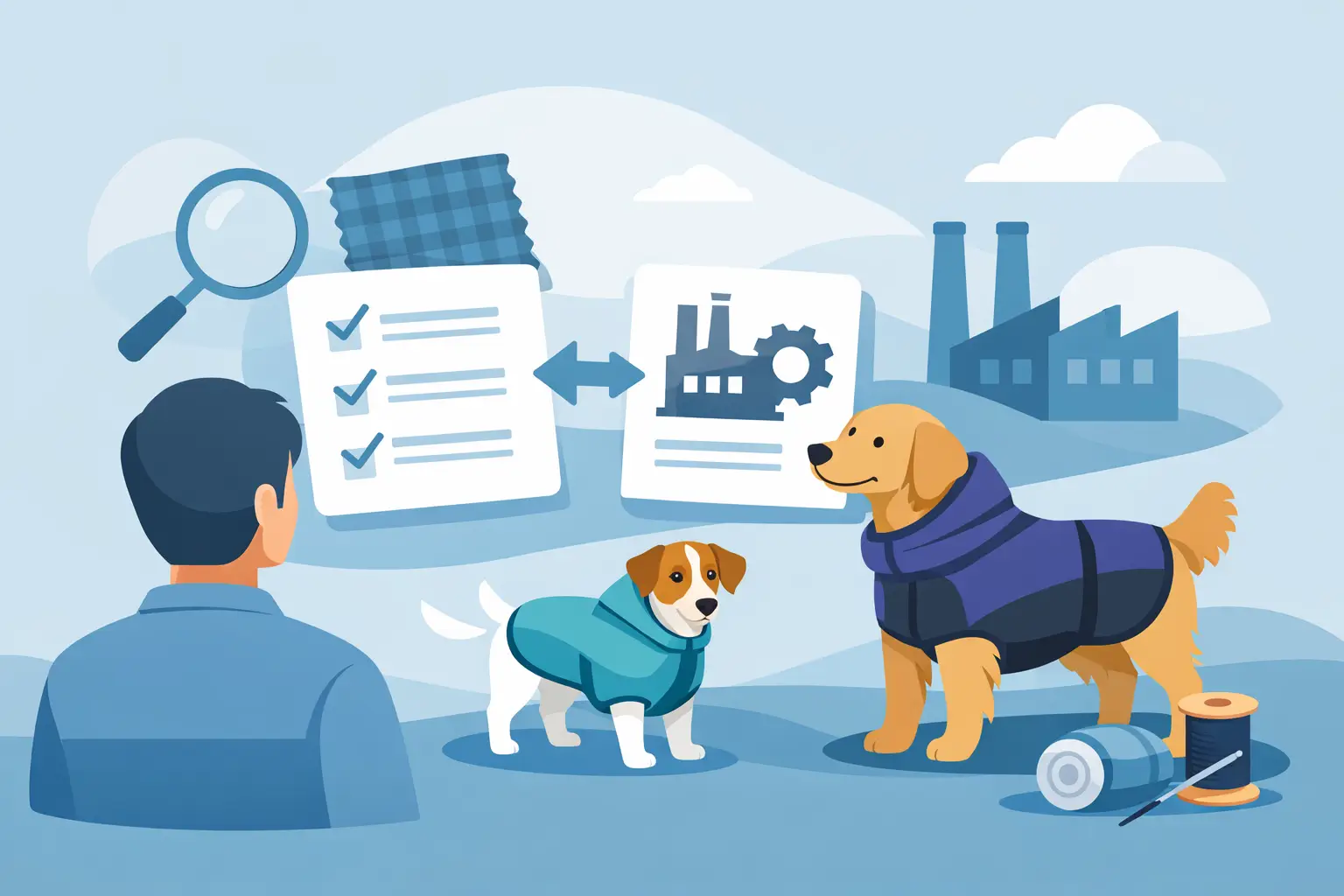
A wet dog product can look simple until returns start coming in. Poor absorbency, awkward fit, weak closures, and fabric that loses performance after washing will quickly turn a promising SKU into a sourcing problem. That is why choosing the right dog drying coat manufacturer is less about finding a factory that can sew a garment and more about securing a partner that understands textile performance, repeat production, and private-label requirements.
For importers, pet brands, wholesalers, and retail buyers, the stakes are practical. A dog drying coat sits at the intersection of pet comfort, owner convenience, and brand reputation. If the product does not dry efficiently, feels bulky, or fits inconsistently across sizes, customers notice immediately. A capable manufacturing partner helps prevent those issues before the first production run.
What a dog drying coat manufacturer should actually deliver
At a commercial level, a drying coat is a performance textile product. It must absorb moisture quickly, stay comfortable against the dog’s coat, hold its shape after repeated laundering, and fasten securely without creating friction or restricting movement. A manufacturer in this category should be able to discuss those requirements in detail, not just confirm that the product can be made.
That difference matters. Some suppliers approach pet apparel as a basic cut-and-sew item. Others understand that a drying coat needs fabric logic behind it. Microfiber weight, cotton content, loop structure, edge finishing, shrinkage control, and closure placement all affect how the finished product performs in real use.
For private-label buyers, manufacturing capability also extends beyond sewing. It includes size grading, custom branding, packaging options, color consistency, label compliance, and repeat-order reliability. If a supplier cannot support those points with confidence, the product may be easy to launch but difficult to scale.
Key product decisions when evaluating a dog drying coat manufacturer
The first area to assess is fabric selection. Absorbency is central, but not every absorbent fabric creates the same customer experience. Microfiber can dry quickly and feel lightweight, which appeals to brands focused on convenience and easy care. Cotton terry offers a natural hand feel and familiar towel-like performance, but weight, drying time, and wash behavior need closer control. In some cases, blends offer the right compromise between softness, absorbency, and production cost.
The second is construction. A drying coat needs to stay in place while remaining easy for pet owners to put on and remove. That means the chest panel, belly coverage, neck wrap, and fastening system all need practical testing. Hook-and-loop closures are common because they are adjustable, but quality matters. A poor-grade closure will weaken with use and create complaints that have nothing to do with the main fabric.
Sizing is another point where strong manufacturers separate themselves. Dogs do not fit into neat standardizations the way many human apparel lines do. Breed diversity creates real fit challenges, especially for brands selling across multiple markets. An experienced dog drying coat manufacturer should be able to advise on measurement systems, grading logic, and whether your range should prioritize broad commercial sizing or a more tailored fit profile.
Why pet textile experience matters
A supplier with general textile capability is not always the same as a supplier with pet product expertise. Pet textiles require practical thinking around movement, wash frequency, coat types, and owner expectations. A dog drying coat is used after bathing, rainy walks, swimming, and grooming. It needs to tolerate regular use and laundering while still looking presentable on the shelf and in customer photos.
This is where category-specific experience has commercial value. Manufacturers familiar with pet apparel are more likely to identify problems early, such as trim that may irritate, fabrics that become too heavy when soaked, or patterns that shift during movement. They can also help align the product to the market position you want to serve, whether that is mass retail, premium pet lifestyle, grooming, or hospitality-related pet care.
For buyers building a broader pet range, this experience becomes even more useful. A manufacturer that already works across related items such as dog bathrobes, pet towels, rain coats, and other pet textiles can support consistency in materials, branding, and collection development.
Dog drying coat manufacturer standards that affect repeat orders
A first order can look good in a sample room and still fail in scaled production. That is why quality assurance should be part of the sourcing conversation from the start. The best outcomes usually come from manufacturers that treat repeatability as seriously as product development.
Fabric consistency is one of the biggest factors. Buyers should ask how GSM tolerance is controlled, how shrinkage is tested, and how color matching is maintained across production runs. If your product line depends on a branded look, even a small shift in shade or hand feel can create problems at retail.
Stitch quality and finishing also deserve close review. Drying coats are handled frequently, pulled on and off active dogs, and washed often. Reinforced seams, clean edge binding, and secure attachment points are not small details. They directly influence product life and customer satisfaction.
Packaging should not be treated as an afterthought either. For ecommerce brands, compact and protective packaging can reduce freight pressure and improve presentation. For wholesale and retail channels, barcode placement, labeling accuracy, and clear size identification support smoother distribution. A manufacturing partner should be ready to match these operational needs, not force buyers into a generic packing format.
Private-label flexibility is not optional
Many buyers searching for a dog drying coat manufacturer are not looking for a stock item. They need a product that reflects their own brand identity. That can mean custom colors, woven labels, embroidered logos, branded care labels, unique packaging, or entirely bespoke sizing and fabric direction.
Private-label flexibility is where collaboration becomes commercially important. The right manufacturer should be able to guide what is realistic at your order volume, where customization adds value, and where it may increase cost without improving sell-through. Not every idea belongs in the first production run. Sometimes a tighter core range with strong branding and reliable quality is the better launch strategy.
This is also where clear development processes matter. Sampling timelines, revision rounds, approval checkpoints, and production lead times should be straightforward. Business buyers do not need vague promises. They need a factory partner that can move from concept to approved sample to bulk production with discipline.
Sourcing trade-offs buyers should consider
There is no single perfect specification for every market. A thicker coat may feel more premium and absorb more water, but it can also raise freight costs and increase drying time after washing. A lighter microfiber option may be more practical for ecommerce and everyday use, yet some customers will prefer the hand feel of cotton-rich materials.
Customization also comes with trade-offs. More fabric colors, trim variations, and packaging details can strengthen branding, but they can complicate production and minimum order planning. Buyers should weigh whether they are building a hero product or a broad assortment from the start.
Lead time is another area where expectations need to stay realistic. A dependable dog drying coat manufacturer should offer clarity, but custom development, material sourcing, and quality controls all take time. Fast production only helps if the goods arrive right and can be reordered with confidence.
What to ask before placing an order
A serious supplier conversation should move past price quickly. Buyers should understand which fabrics are recommended and why, how sizing is developed, what testing or internal checks are used, and how branding elements are applied in production. It is also worth reviewing sample quality against likely bulk outcomes, not just against ideal presentation.
Ask how the factory handles repeat orders, what categories they already produce in pet textiles, and whether they can support future line extensions. A long-term manufacturing relationship is often more valuable than a slightly lower opening price, especially in categories where consistency drives repeat purchase and brand trust.
For brands that want a manufacturing partner rather than a transactional supplier, category breadth is an advantage. A company such as Oya Textile, with experience across pet textiles and custom production, can support buyers who need both product quality and a dependable path to scale.
The right manufacturing partner will not just quote a dog drying coat. They will help shape a product that performs well, represents your brand properly, and holds up across repeat orders. That is where better sourcing decisions start – and where stronger pet product lines are built.
