
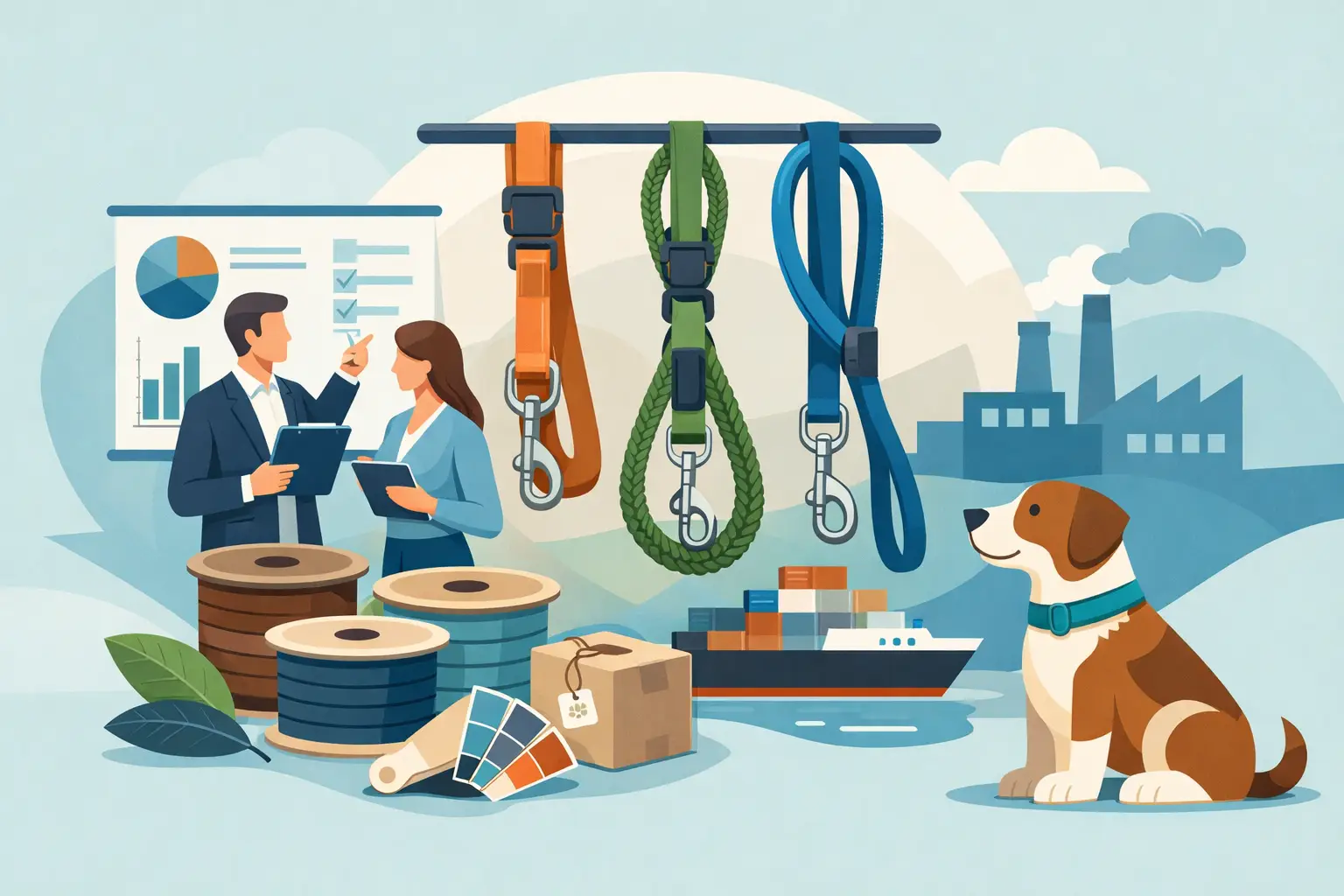
A dog leash can look simple on a product page and still fail where it matters most – in daily use, under tension, in wet weather, or after repeated washing. That is why choosing a private label dog leash supplier is not a routine sourcing task for growing pet brands. It is a product quality decision, a brand reputation decision, and, in many cases, a customer retention decision.
For retailers, importers, and private-label pet brands, the right supplier does more than manufacture to spec. A strong manufacturing partner understands how textiles, webbing, stitching, hardware, labeling, and packaging work together in a finished product. That matters when you are building a leash line that needs to feel premium, perform consistently, and support repeat orders without costly variation.
What a private label dog leash supplier should actually provide
Not every factory that can make a leash is equipped to support a private-label program. There is a difference between basic production capacity and true brand-ready manufacturing. If your business is developing a pet accessories line, you need more than a vendor that offers standard colors and a logo tag.
A capable private label dog leash supplier should be able to align product construction with your target market. That starts with material options such as polyester webbing, cotton-based constructions, padded handles, reflective details, and weather-resistant finishes. It also extends to branded details including woven labels, printed logos, custom packaging, barcode application, and size or style differentiation across a collection.
Just as important, the supplier should understand repeatability. A launch order is only the beginning. If a leash sells well, you need confidence that the next production run will match the first in hand feel, stitch quality, hardware strength, and color consistency. For commercial buyers, that reliability is often more valuable than chasing the lowest unit cost.
How to assess a private label dog leash supplier before you commit
The first question is not price. It is whether the supplier understands the product category well enough to produce it with consistency. Dog leashes sit in a practical segment where end users notice construction problems quickly. Fraying edges, weak clips, poor handle comfort, and inconsistent sizing do not stay hidden for long.
Start by reviewing the supplier’s category experience. A manufacturer with real pet textile knowledge will usually speak clearly about webbing structures, reinforcement points, washing performance, and hardware matching. They should be comfortable discussing not just aesthetics, but also strength, wear resistance, and daily-use conditions.
Sampling is where many sourcing decisions become clearer. Ask for samples that reflect your intended positioning, whether that is entry-level, mid-market, boutique retail, or hospitality-adjacent pet use. The sample should be evaluated in hand, not just by appearance. Look at stitching density, clean finishing, edge quality, clasp attachment, logo application, and packaging execution. If the sample looks good in photos but feels inconsistent in person, that is worth taking seriously.
Communication is another early signal. A dependable supplier answers technical questions directly, confirms specifications clearly, and flags potential issues before production begins. If a factory avoids specifics around materials, lead times, tolerances, or customization limits, the partnership may become difficult once volume increases.
Product quality is built from materials and construction
A leash is only as dependable as the materials behind it. Buyers sometimes focus heavily on color, branding, and packaging while giving less attention to the structure of the product itself. That can become expensive later, especially when returns and complaints start appearing.
Webbing quality is one of the first things to verify. The feel, weight, weave tightness, and durability of the base material all influence the final result. Softer is not always better. A soft hand feel can appeal to consumers, but the leash still needs the right strength and shape retention for intended use. The right balance depends on breed size, use case, and your brand positioning.
Hardware selection also matters more than many first-time buyers expect. Clips, rings, and adjustment components should match the leash design and target use. Lightweight hardware may suit smaller dogs or fashion-focused products, while larger breeds require stronger and more durable options. A serious supplier will explain these trade-offs instead of applying the same component set across every style.
Then there is stitching. Reinforced stitching at load-bearing points is not a cosmetic detail. It is central to performance. Clean finishing, consistent seam quality, and secure attachment areas are strong indicators of manufacturing discipline. When a supplier pays attention to these basics, the finished product usually reflects it.
Customization should support your brand, not complicate production
Private label works best when customization is intentional. Many brands make the mistake of requesting too many variations too early – multiple widths, colors, trims, labels, and packaging formats all at once. That can create avoidable complexity, especially in initial runs.
A skilled supplier will help narrow the product architecture so the collection remains commercially practical. For example, it may be smarter to launch with a focused leash range built around a few dependable constructions and brand-specific details rather than a broad assortment with unstable production variables.
This is where a manufacturing partner adds real value. They can advise on what custom elements create visible brand distinction without slowing production or increasing quality risk. Sometimes the strongest private-label product is not the most complicated one. It is the one that combines clear identity with dependable execution.
For brands expanding into coordinated pet collections, leashes may also need to align with harnesses, raincoats, drying coats, or other textile-based accessories. In that case, working with a supplier that understands adjacent pet textile categories can help create a more consistent brand line.
Lead times, MOQs, and scaling realities
Commercial buyers often ask about minimum order quantities early, and for good reason. MOQs affect cash flow, SKU planning, and market testing. But MOQ should be looked at alongside production stability. A low minimum is attractive only if the supplier can maintain quality and support growth when orders increase.
Lead time is similar. Fast production sounds good, but unrealistic timelines often create downstream problems. Missed shipment dates, rushed finishing, and substitutions in materials or components can undermine the product. A reliable supplier gives realistic timelines and explains what affects them, including sampling approval, raw material readiness, labeling requirements, and seasonal production pressure.
Scalability matters if your business is preparing for larger retail programs or repeat import orders. Ask how the supplier manages reorder consistency, material sourcing continuity, and quality checks between batches. It is better to understand those systems before your product line gains traction than after a successful launch creates urgency.
Why manufacturing location still matters
For many buyers, sourcing from an experienced textile manufacturer in Turkey offers a practical balance of quality, craftsmanship, and production flexibility. This is especially relevant for brands that want stronger textile know-how behind their pet accessories rather than purely generic mass production.
Made-in-Turkey manufacturing has a strong reputation in textile categories because it combines technical experience with a production culture that values finishing quality. For dog leashes and related pet products, that can translate into better control over fabric-based components, stitching standards, and private-label customization.
That does not mean location alone guarantees the right fit. It still comes down to factory capability, communication, and process discipline. But when the product depends on textile performance, regional expertise can be an advantage.
What long-term buyers usually value most
The best supplier relationships are rarely built on price alone. Experienced buyers look for a partner that helps protect margin through consistent production, fewer product issues, and smoother replenishment. A private label dog leash supplier should strengthen your business by making your product line more dependable, not more complicated.
That is why technical clarity, sampling accuracy, customization control, and repeat-order reliability all deserve close attention. Buyers who evaluate those factors early tend to make better sourcing decisions than those who compare factories on quote sheets alone.
At Oya Textile, this is how we view private-label manufacturing – as a long-term production partnership shaped around product performance, brand requirements, and repeatable quality. For pet brands building a leash collection that needs to hold up in the market, a careful supplier choice at the start usually saves far more than it costs.
The best time to ask hard questions is before the first order, while every detail is still easy to improve.
