
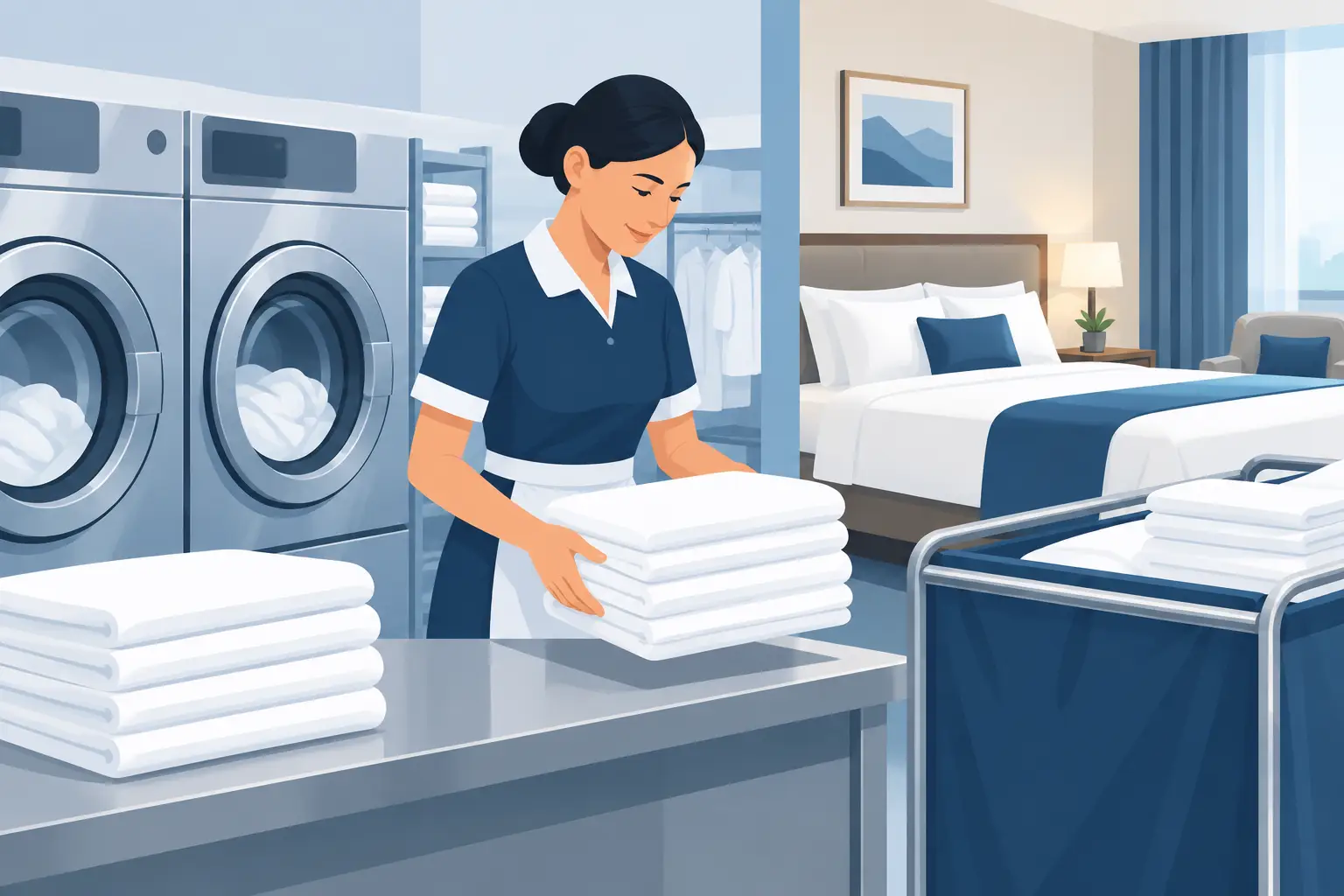
A white towel can look clean and still feel thin, stiff, or prematurely worn. For hotels, resorts, laundries, and accommodation providers, that difference is visible to guests and expensive at scale. This commercial laundry textile care guide focuses on the decisions that protect textile appearance, performance, and replacement budgets over repeated wash cycles.
Commercial textiles are designed to work harder than household goods. Hotel bed sheets must maintain a smooth hand after frequent laundering. Bath towels need absorbency without becoming rough. Bathrobes, slippers, mattress protectors, and specialty items each require their own balance of hygiene, comfort, and durability. Good care begins before the first load enters the machine.
Start With the Right Textile Specification
Laundry performance is determined partly in the wash room, but it is established much earlier in sourcing and product development. Fiber composition, yarn quality, fabric construction, dye method, finishing, weight, and trim all influence how a textile responds to commercial processing.
For example, 100% cotton towels offer a familiar, natural hand and strong absorbency, but they need correct drying and chemical control to preserve softness. Cotton-polyester bed linen may offer improved dimensional stability and faster drying, which can be useful for high-turnover properties. Neither option is universally better. The right choice depends on the guest experience you want to provide, your laundry process, and the expected number of use cycles.
Procurement teams should request clear care recommendations during product approval, not after delivery. A supplier should be able to explain the intended laundering conditions, expected shrinkage tolerance, colorfastness expectations, and any limitations associated with embroidery, piping, waterproof layers, or decorative finishes. This is particularly important for custom private-label programs, where branding details must remain presentable over time.
Sort Textiles Before Problems Start
Mixed loads are one of the most common causes of avoidable damage. Sorting is not only about separating whites from colors. It means separating products with different soil levels, weights, constructions, and care needs.
Heavily soiled kitchen or cleaning textiles should never share a load with guest towels or bed linen. Towels create lint, which can transfer to smoother sheets and robes. Items with zippers, hooks, or hard trims can snag lightweight textiles. Pet towels and pet robes may need a separate process because hair, odor, and heavier soils require different handling than standard hospitality linen.
A practical sorting system usually separates at least these groups:
- White bed linen and white terry towels
- Colored textiles and dark garments
- Heavily soiled operational items
- Delicate, waterproof, coated, or specialty products
Label carts and train staff to identify exceptions. A simple system used consistently will protect more inventory than an overly complex process that is ignored during a busy turnover period.
Check Stains Before Drying
Heat sets many stains, especially protein-based marks, oils, cosmetics, and certain beverage spills. Inspecting textiles after washing and before drying gives laundry staff a chance to re-treat pieces that need attention. Once a stain is baked into the fabric, aggressive bleaching may be the only remaining option, and that can shorten the textile’s life.
Control Chemistry, Time, and Temperature
Commercial laundry is a controlled process, not simply a hot wash with more detergent. Excessive chemical dosing can cause yellowing, stiffness, weakened fibers, and skin-irritating residue. Insufficient dosing can leave soils, body oils, and odors behind. The goal is to match chemistry to water hardness, soil type, machine capacity, and textile construction.
Water quality deserves close attention. Hard water can reduce detergent efficiency and leave mineral deposits that make towels feel rough. A professional water analysis can reveal whether softening, adjusted detergent levels, or a revised wash formula is needed. For properties that use municipal and well water across different sites, this assessment should be location-specific.
Temperature also requires judgment. Higher temperatures support sanitation and soil removal, but continuous exposure to excessive heat can reduce tensile strength, accelerate fading, and damage elastic, laminated, or water-resistant components. Follow the textile manufacturer’s recommendations and use the lowest effective temperature that meets your hygiene standards and local operating requirements.
Bleach should be treated as a precise tool, not a universal solution. Chlorine bleach can be effective for certain white cotton goods when used correctly, but overuse weakens cellulose fibers and may create holes or yellow tones. Oxygen-based bleach is often gentler for colored goods and can support stain management, though performance depends on the formula and wash conditions. Never assume one bleach program is suitable for every product category.
Protect Towels, Robes, and Terry Products
Terry textiles are judged by touch as much as appearance. Guests notice when a towel no longer absorbs water or when a robe feels harsh against the skin. The most common causes are overdrying, fabric softener buildup, mineral deposits, and overly aggressive mechanical action.
Avoid using more softener to solve roughness without identifying the cause. Heavy softener application can coat cotton loops and reduce absorbency. If towels are stiff, review rinse quality, water hardness, drying temperature, and detergent residue before changing the formula.
Drying should stop as soon as goods reach the appropriate moisture level. Overdrying makes fibers brittle, increases shrinkage, and consumes unnecessary energy. Operators should also avoid packing machines beyond their rated capacity. Crowded dryers restrict airflow and produce uneven results, leading staff to extend cycle times and expose all goods to excess heat.
For hotel bathrobes, consider the full construction. A plush cotton robe, a lightweight waffle robe, and a robe with contrast piping will not always tolerate the same process. Separate testing during product development helps establish a care program that protects the garment’s shape, trim, and branded presentation.
Keep Bed Linen Smooth and Presentable
Sheets and duvet covers face a different set of pressures: body oils, makeup, cosmetics, food marks, and repeated ironing or finishing. The aim is a clean, smooth surface with stable dimensions and a crisp but comfortable feel.
Do not overload washers or extractors. Bed linen needs room to circulate so soils can release and rinse water can remove chemistry. Overloading may appear efficient per cycle, but it often produces rewashes, uneven cleaning, and more rapid fabric wear.
Ironing and flatwork finishing should be calibrated carefully. Excess heat can scorch fibers, set wrinkles, and reduce fabric strength. If sheets emerge with grayness, a harsh hand, or a recurring odor, the issue may be incomplete rinsing or poor soil removal rather than the finishing equipment itself. Track recurring defects by item type and batch so the team can identify patterns rather than treating every issue as isolated.
Build Inspection Into the Linen Cycle
A disciplined inspection program prevents damaged items from reaching guest rooms and helps purchasing teams forecast replacements with more accuracy. Inspect textiles at key points: on delivery, after initial processing, during room turnover, and before items return to circulation.
Look for thinning fabric, broken loops, seam failure, discoloration, shrinkage, loss of absorbency, and damaged labels or branding. Record rejection reasons. If a particular issue appears repeatedly, determine whether the cause is product construction, laundry chemistry, equipment settings, staff handling, or an unsuitable application.
This feedback matters when ordering custom products. A trusted manufacturing partner can use real operating data to adjust yarn, fabric weight, stitching, sizing, finishing, or packaging specifications for the next production run. At Oya Textile, commercial textile development is approached with this long-term perspective: products should be designed for the conditions they will actually face, not only for their appearance at delivery.
Train Teams and Measure What Matters
Even well-specified textiles will fail early if procedures vary by shift. Provide clear instructions for sorting, loading, dosing, stain treatment, drying, and rejection. Visual guides near machines are useful, especially when teams process multiple textile categories in the same facility.
Measure practical indicators, including rewash rate, stain rejection rate, linen loss, average replacement intervals, utility use, and guest complaints related to towels or bedding. A higher-cost towel that remains absorbent and presentable through more cycles may deliver better value than a lower-cost option that requires early replacement. The same principle applies to sheets, robes, slippers, and specialty pet care products.
Textile care is not a back-of-house detail. It is part of the guest experience, brand standard, and operating margin. When product specification and laundry practice are aligned, each wash cycle becomes an opportunity to preserve the quality your guests can feel.
