

A bathrobe may occupy little space in a guest room, but it carries a large share of the guest’s perception of comfort. A thin robe that loses shape, sheds lint, or feels rough after laundering can undermine an otherwise well-appointed stay. Choosing the right hotel bathrobes supplier is therefore not simply a purchasing decision. It is a decision about guest experience, operating costs, and the consistency of your brand.
For hotels, resorts, spas, retailers, and private-label businesses, the best supplier is one that can translate a product brief into dependable production at scale. That means more than offering a catalog of robes. It means understanding fabric performance, construction details, customization requirements, packaging, and the realities of repeat orders.
Start With the Intended Guest Experience
Before comparing samples or prices, define what the robe needs to do. A luxury resort spa, an urban business hotel, a wellness retailer, and a budget accommodation provider may all require bathrobes, but their product priorities are different.
A plush terry robe creates a substantial, premium feel and is well suited to spa environments, suites, and properties where the robe is part of a high-touch guest experience. Its trade-off is weight. Heavier robes use more material, take longer to dry, and can increase laundry and shipping costs.
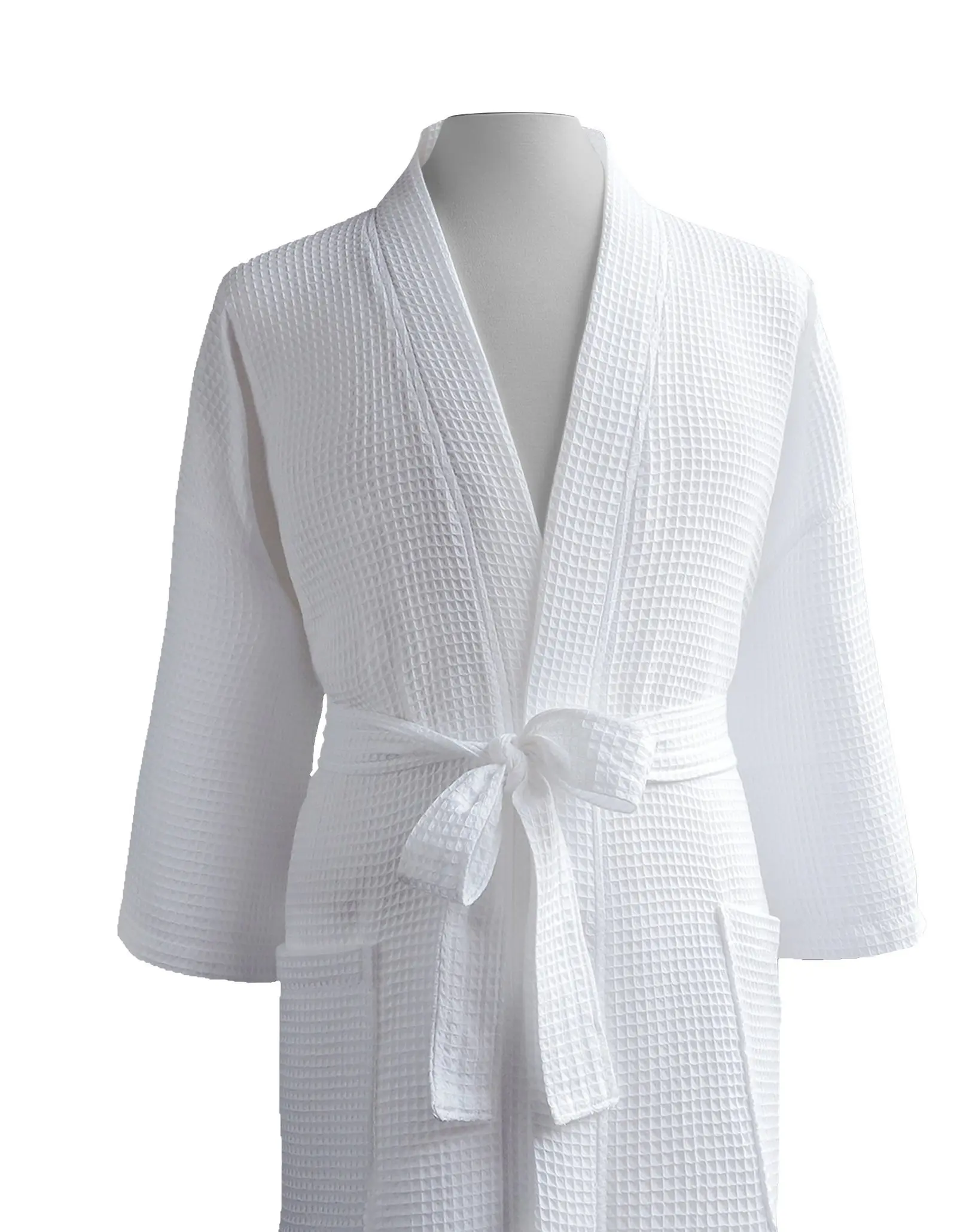
Waffle robes offer a lighter, cleaner profile. They are popular for warm climates, spas, and hotels that need a refined robe with faster drying performance. A waffle construction can feel elegant, but the fiber blend and fabric weight must be selected carefully to avoid a robe that feels too light or lacks durability after repeated washing.
Velour and shawl-collar designs create a more luxurious visual statement, particularly for premium rooms and retail programs. Kimono styles, meanwhile, offer a modern, versatile option that works across many hospitality settings. The right choice depends on your positioning, climate, guest profile, and laundry operation.
A capable supplier should ask these questions early. If a supplier recommends the same robe for every property without discussing use conditions, that is a warning sign.
Evaluate Fabric Quality Beyond Initial Softness
The first touch of a sample matters, but it should not be the only test. Hotel bathrobes must perform after repeated commercial laundering, handling, folding, and guest use. Softness that disappears after several wash cycles is not hospitality-grade quality.
Cotton remains a preferred choice because it is absorbent, breathable, and familiar to guests. The quality, yarn selection, pile construction, and fabric weight all influence the final result. A 100% cotton terry robe may be the right choice for a premium program, while a cotton-polyester blend can offer better shape retention, quicker drying, and a more manageable cost for high-volume operations.
There is no universally superior composition. The practical choice depends on whether your priority is maximum natural feel, lower laundry time, improved durability, or price control. Your hotel bathrobes supplier should be able to explain these trade-offs clearly rather than relying on broad quality claims.
Ask for detailed specifications, including fabric composition, GSM, available sizes, collar style, belt construction, pocket design, and care recommendations. These details make it easier to compare suppliers accurately and protect your purchasing team from receiving products that look similar but perform differently.
Check Construction Where Failures Usually Happen
Most robe failures are not dramatic at first. They appear over time: loose belts, opened seams, twisted side panels, pocket corners pulling away, or collars that lose their shape. These are construction issues, and they affect replacement costs as much as guest satisfaction.
Review the seams around the armholes, belt loops, pockets, collar, and side openings. Look for neat stitching, secure reinforcement at stress points, and consistent finishing from one sample to another. The belt should be long enough for comfortable wear and firmly secured without creating an awkward pull on the garment.
Sizing also deserves attention. A one-size robe can simplify inventory, but it does not always suit every property or guest demographic. Hotels serving diverse international guests may benefit from multiple size options or an intentionally generous unisex pattern. Retail and private-label programs often need a more defined size range to reduce returns and improve customer satisfaction.
Samples should be assessed not only in a showroom but also through washing trials. A supplier confident in its production standards will support a realistic evaluation process and provide clear care guidance.
Choose Customization That Strengthens Your Brand
A bathrobe becomes a branded hospitality asset when its details reflect the property or retail line. Embroidery, woven labels, printed care labels, custom colors, contrast piping, and branded packaging can turn a standard robe into a recognizable part of the customer experience.
However, customization should be approached with production practicality in mind. A complex embroidery placement, unusual fabric color, or highly customized packaging may require higher minimum order quantities and longer lead times. That does not make customization a poor choice. It means the supplier should help you balance visual impact with repeat-order efficiency.
For hotels, a discreet embroidered logo on the chest or cuff often delivers a polished result without overwhelming the design. For private-label retailers, custom neck labels, hangtags, barcode-ready packaging, and size labeling may be equally important. A manufacturer with private-label experience understands that presentation, compliance information, and packing consistency matter alongside the robe itself.
Oya Textile supports made-to-order hotel bathrobes with customization options designed around each buyer’s brand requirements, from fabric selection and styling to labels and packaging.
Assess Production Reliability Before You Place a Large Order
A beautiful sample is only the beginning. The real test of a supplier is whether the same specifications can be reproduced consistently across a larger production run and future orders.
Ask how the supplier manages color matching, quality control, production approvals, and final inspection. For custom programs, establish a clear reference sample or approved specification sheet before bulk manufacturing begins. This document should identify the robe’s material, weight, dimensions, logo placement, color standard, packing method, and acceptable tolerances.
Reliable communication is also part of product quality. Procurement teams need accurate information about minimum order quantities, sampling timelines, production lead times, shipment preparation, and any factors that could affect delivery. A serious manufacturing partner does not promise unrealistic schedules to win an order. It provides a workable plan and communicates early if an adjustment is needed.
For repeat-order programs, ask whether the supplier can retain approved specifications, artwork, and production references. This is especially valuable for hotel groups, wholesalers, and brands that need continuity across seasonal purchasing cycles or multiple markets.
Compare Total Cost, Not Only Unit Price
The lowest robe price can become the highest-cost choice if the product wears out quickly, requires excessive replacement, or creates guest complaints. A useful supplier comparison considers the full cost of ownership: unit cost, expected lifespan, laundry behavior, shipping volume, customization expense, and the administrative burden of managing quality issues.
A lighter robe may reduce shipping and laundry costs but may not deliver the premium feel required by your guests. A heavier robe may last longer and improve perception, yet require a larger investment. The right decision is based on your operating model, not a single price line.
It is also wise to clarify commercial terms before moving forward. Confirm payment conditions, packaging quantities, labeling requirements, inspection procedures, incoterms, and documentation needs. International buyers should work with suppliers experienced in export coordination and commercial textile requirements for their destination market.
Questions to Ask a Hotel Bathrobes Supplier
A focused supplier conversation can reveal more than a polished brochure. Ask whether the robe has been tested through repeated laundering, what fabric options are recommended for your use case, how customization affects lead time, and what quality checks are completed before shipment.
You should also ask how the supplier handles a specification change, whether they can produce matching slippers or complementary bath textiles, and how they maintain consistency on repeat orders. These answers show whether you are dealing with a transactional seller or a manufacturing partner prepared to support a long-term program.
The strongest bathrobe program starts with a clear brief and an honest production conversation. When a supplier understands your guest standard, commercial goals, and operational limits, the robe becomes more than an amenity. It becomes a reliable expression of the comfort your brand promises.
