
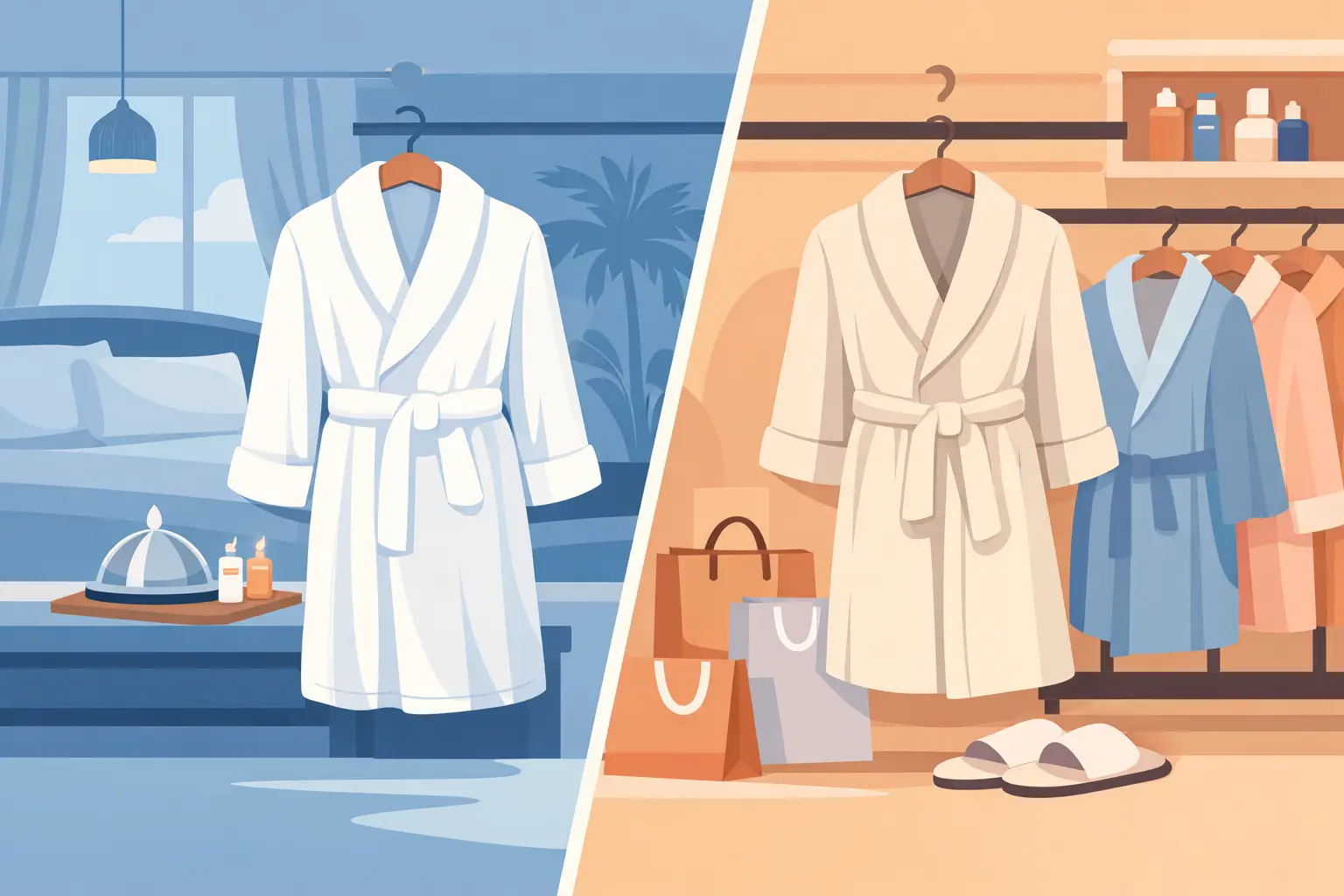
A bathrobe that feels excellent in a showroom can fail quickly in a hotel laundry cycle. That is the real issue behind hotel bathrobes vs retail bathrobes. On the surface, both serve the same purpose, but for buyers, brand owners, and hospitality operators, they are built for very different demands.
If you are sourcing for a hotel, spa, retailer, or private-label collection, the difference is not cosmetic. It affects replacement rates, guest satisfaction, margins, fabric performance, and how your brand is perceived after repeated use. The right robe depends on who will wear it, how often it will be washed, and whether the product is meant to support a hospitality operation or compete on a retail shelf.
Hotel Bathrobes vs Retail Bathrobes: The Core Difference
Hotel bathrobes are designed around operational performance. They need to hold their shape, maintain absorbency or softness, and present a consistent appearance after industrial laundering. They are typically selected by procurement teams that look beyond first-touch softness and focus on durability, fabric stability, ease of care, and dependable replenishment.
Retail bathrobes are designed around consumer appeal at the point of sale. They often prioritize immediate hand feel, trend-driven styling, packaging, and size variety. In many retail environments, the robe needs to look attractive online or in-store before it proves itself over months of use.
That does not mean one category is better than the other. It means the product brief is different. A robe built for a five-star property has different performance targets than one built for a lifestyle brand, department store, or e-commerce launch.
Fabric Performance Is Where the Gap Shows
The fastest way to understand hotel bathrobes vs retail bathrobes is to look at fabric behavior over time.
Hotel robes are usually developed with repeated laundering in mind. Cotton terry, velour, waffle weave, and cotton-poly blends may all be used, but the construction has to support commercial wash conditions. Fabric weight matters, but so do yarn quality, shrinkage control, loop stability, color consistency, and seam durability. A robe that becomes twisted, rough, or misshapen after twenty washes is expensive in a hotel environment, even if the initial cost looked attractive.
Retail robes often lean more heavily on initial softness, fashionable texture, or visual finish. Plush microfiber, lightweight fleece, and brushed fabrics can perform well in home use, especially when laundering is less aggressive. But those same materials may not suit high-turn hospitality operations where robes are cleaned frequently and expected to maintain a consistent guest-ready look.
This is where buyers need discipline. A retail-feel robe can seem appealing for hospitality because it feels luxurious on day one. But if the product is not developed for commercial use, the lifecycle cost can outweigh the purchase price advantage.
Absorbency, Warmth, and User Expectation
Not every robe is meant to do the same job. In hotels and spas, guests may expect a robe that works after bathing, pool use, or wellness treatments. Terry cloth and waffle designs are often chosen because they balance comfort with practical absorbency and quicker drying.
Retail customers may shop with a different expectation. Some want a post-shower robe, but many are buying for lounging, gifting, or seasonal comfort. That is why retail assortments often include heavier plush styles, fashion colors, or lighter decorative robes that would not make sense in a hotel room program.
A smart sourcing decision starts with use case, not category labels.
Sizing, Fit, and Operational Simplicity
Hotels generally prefer streamlined size strategies. One-size, dual-size, or limited size ranges reduce inventory complexity and simplify housekeeping operations. The fit needs to work for a broad guest profile without creating excessive stock variation.
Retail bathrobes usually need a wider size curve because consumers expect a more personalized fit. Sleeve length, body length, hood styling, belt placement, and silhouette become stronger selling points. In retail, fit can influence returns and reviews as much as fabric quality.
For B2B buyers, this has implications beyond design. More size options mean more SKUs, more forecasting complexity, and more room for stock imbalance. That may be acceptable in retail, but it is rarely efficient for hospitality programs.
Design Details That Matter More Than They Seem
Pockets, collar style, hanger loops, cuff finishing, double belt loops, and reinforced stitching all affect product suitability. In a hotel, these details support long-term use and operational handling. In retail, they may be more closely tied to style, brand identity, and merchandising.
For example, a shawl collar robe in dense terry can communicate classic hotel comfort. A hooded fleece robe may perform strongly in retail gifting. Both can be quality products, but they answer different buying needs.
Branding Requirements Are Completely Different
One of the clearest differences in hotel bathrobes vs retail bathrobes is branding execution.
In hospitality, branding is often understated. Embroidery, woven labels, and color selection are usually aligned with the property identity, but the robe still needs to feel universal and elegant. Hotels are not trying to create crowded branding. They are trying to reinforce a premium guest experience.
In retail, branding may be much more visible. Packaging, hangtags, private-label labeling, size stickers, barcode requirements, care instructions, and collection storytelling all play a stronger role. The robe is not just a textile item. It is a retail product that must communicate value before the customer experiences its long-term performance.
For private-label brands, this distinction is critical. A strong manufacturer should be able to support both directions, but the development process should reflect the final sales channel.
Cost Per Unit vs Cost Per Use
Procurement teams that compare only unit price often make the wrong decision.
Hotel robes should be evaluated by cost per use. A robe that lasts significantly longer, launders more cleanly, and keeps a better appearance can deliver better value even at a higher initial price. Replacement frequency, guest complaints, housekeeping efficiency, and textile loss all shape the real cost.
Retail robes are evaluated more broadly. Unit economics still matter, but so do packaging cost, target margin, perceived value, and competitive price positioning. A premium-feel robe at a retail-friendly cost can be the right decision even if it is not engineered for industrial laundering.
This is why category crossover can create problems. A robe suitable for home retail may not survive a hospitality program profitably. A true hotel robe may feel too standardized or too operationally focused for a fashion-led retail line.
What Buyers Should Ask Before Sourcing
Before approving a bathrobe program, buyers should clarify the environment the product is entering. Will it be washed at industrial scale or at home? Is absorbency more important than visual plushness? Does the brand need broad size grading or simplified stock control? Is the robe part of a premium guest experience, a retail gift program, or a long-term private-label collection?
It also helps to ask how the robe should perform after repeated washing, not just at first delivery. Fabric composition, GSM, shrinkage tolerance, stitching standards, label placement, and branding methods should all be discussed early. These details separate a generic robe order from a commercially sound product line.
An experienced manufacturing partner can guide these decisions before sampling moves too far in the wrong direction. For businesses developing custom bathrobes, that advice is often as valuable as the product itself.
Choosing the Right Path for Hospitality or Retail
If you are sourcing for hotels, resorts, spas, or serviced accommodations, choose a robe engineered for repeat laundering, operational consistency, and guest comfort across many use cycles. If you are sourcing for retail, e-commerce, or private-label home collections, choose a robe that aligns with your target customer, pricing strategy, packaging needs, and brand presentation.
Some businesses need both. A hotel brand may want in-room robes and a separate retail version for sale to guests. In that case, using one robe for both channels is not always the best solution. Often, the smarter move is to develop related but distinct products – one optimized for hospitality performance, the other for retail appeal and take-home value.
At Oya Textile, this is where custom manufacturing makes the difference. The goal is not to force the same robe into every sales channel. The goal is to build the right robe for the right use, with dependable production standards behind it.
A bathrobe may look like a simple product, but in commercial sourcing, simple products are often where quality decisions show up fastest. Choose the robe for the reality of its use, and the results will be visible long after the first touch.
